Quiet Hospitality Isn't a Brand
Every developer building a "quiet luxury" property right now is making the same mistake, and you won't find it in the design.

Every developer building a "quiet luxury" property right now is making the same mistake, and you won't find it in the design.
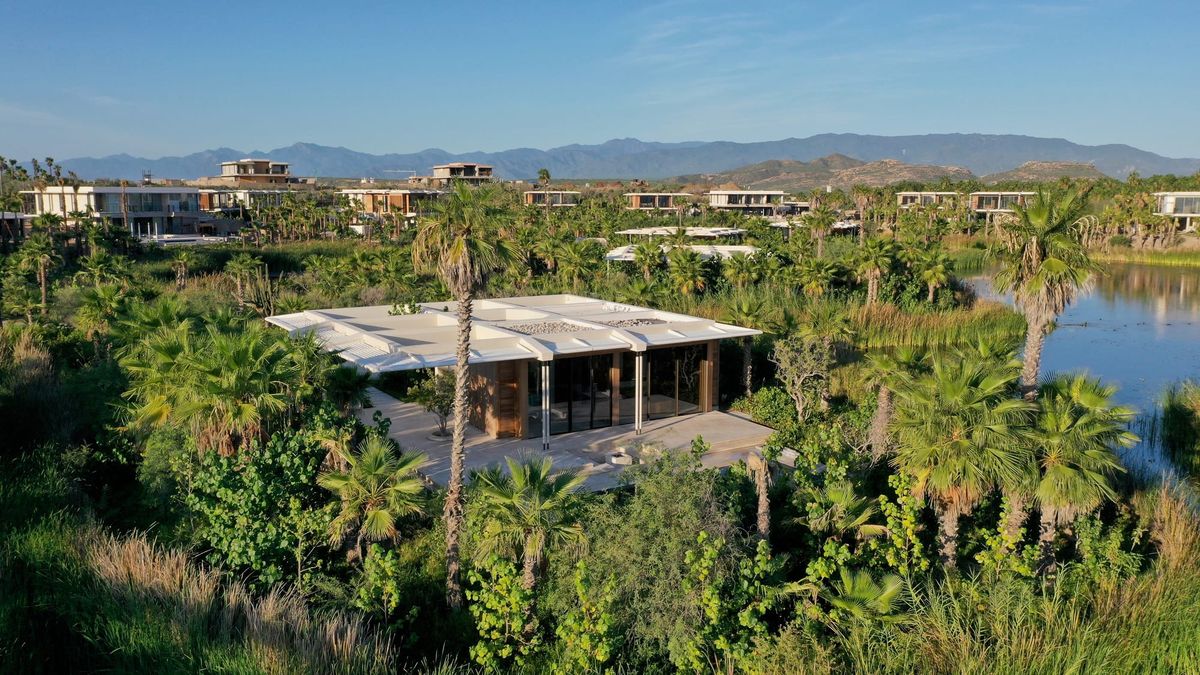
There's a conversation happening across the luxury hospitality industry right now, and most of it is in the wrong register. Marketing teams are writing taglines about "understated elegance" while brands and architects are defaulting to tonal color palettes. And somewhere a developer is approving a mood board called "quiet luxury" and moving on to the next agenda item. What none of them are talking about is how the thing actually works.
I've spent the last ten years moving between architecture and development for demanding hospitality projects. What I've (painfully) learned is that quiet hospitality is not an aesthetic. It's a feeling. And feelings are not the product of a mood board. They are the product of operational excellence, delivered consistently, across every department, at every moment of a guest's stay. Get that wrong, and no amount of beautiful stone will save you.
That Feeling Is the Product
When you stay somewhere that genuinely delivers quiet luxury, there's no visible effort. No one is fawning over you. You’re not being watched. You simply get what you need, when you need it and otherwise, the staff just disappear.
That disappearing act is not accidental. It’s tightly choreographed. A dance between the empowered teams and spaces that support them in solving problems before the guest realizes there was one. Think of a duck gliding across still water — calm and effortless on the surface, legs working hard underneath and out of sight.
Aman has built their entire model around this principle. Their staff-to-guest ratio is often cited as 6-to-1 , a number that gets repeated because it's measurable. But behind that number, and more importantly, is a staff empowered to move across departments, wear multiple hats, and take ownership of the guest experience without waiting to be told. As one analysis of the brand put it, Aman's service approach is "not mechanical — it is intuitive and relationship-driven." Staff are encouraged to be warm and human. Their personalities are part of the experience.
That's not training. That's culture. And culture, as Will Guidara writes in Unreasonable Hospitality, can't be taught — it has to be caught.
Where Quiet Luxury Actually Gets Built
Here's what most developers get wrong: they treat the guest experience as an opening-week problem. Hire the right GM, run the staff through their paces, and you're done. The reality is that the guest experience is determined years earlier in the documents, decisions, and conversations that happen before a single foundation is poured.
It starts with the Project Brief. This document, when written with genuine intention, can be the North Star for every stakeholder on the project. Management, operations, design consultants, engineers, ownership: they all need to be brought into alignment for quiet luxury to work. The Project Brief makes that possible. It spells out:
Without this, you get fragmentation. Decisions get made in isolation, and they compound. The design team builds beautiful spaces that the operations team can't run efficiently.
With a well articulated brief, you have something to return to when priorities conflict (as they inevitably will at some point in the development process).
Your Budget Is the Statement on Values
One of the most revealing things a developer can do is look at where they've allocated their budget. Not because the numbers tell the story, but because they reveal what was actually valued versus what was said to be valued.
The line item that consistently gets undercut is FF&E and OS&E: furniture, fixtures, equipment, and operating supplies. These items come late in both th design and procurement process, which means they rarely get adequate attention at the high-level budgeting stage. This is a critical mistake, and one you won’t realize until much of the budget is already spent. Because FF&E is exactly what the guest touches, smells, uses, and feels throughout their stay. The weight of the cabinet knob to the minibar. The scent of the room when you walk in. These sensory details are what create the emotional memory of a stay and getting them right requires iteration. It requires prototyping, revising, testing, and doing it again. Budget for only the final production and you've already lost. You need to budget for the entire design and iteration process, and then you need all those individual elements to work in concert, cohesively, under a single point of view. That costs more than people want to admit.
A budget that doesn't reflect that reality isn't a financial document. It's a set of future compromises.
Choreography 101: Front of House and Back of House
One of the most consequential spatial decisions in a luxury resort is the relationship between front-of-house experience and back-of-house operations. And it's almost always treated as an afterthought.
When defining your area program in the Project Brief, the question isn't whether to centralize or distribute your operational support such as kitchens, laundry, housekeeping, maintenance. It's how to find the right balance between the two. Centralizing operations reduces CapEx and creates efficiencies. But centralized facilities are large, visually intrusive, and generate significant staff traffic across the property. This increases the risk of breaking the sense of peace and calm you're trying to create.
Best to centralize where industrialization makes sense, such as food preparation and laundry processing, and then distribute the last mile: smaller, discreet spaces that sit just behind the guest-facing areas, staging the final steps of service delivery without ever exposing the machinery to the guest.
This is where the area program in the Project Brief becomes critical. Decisions about how the back-of-house areas are distributed fundamentally shapes the successful execution of quiet luxury. So those decisions need to be made early, with clear input from the operational teams who will actually run the property.
Bring the Operators In Before It's Too Late
This is where I've seen some of the best brands fall short, including operators I deeply respect.
By the end of schematic design, you should know every space you need to build and roughly how large each one needs to be. That's the moment, before the detailing inherent in design development (and certainly before construction documents) to bring departmental leaders into the conversation. Housekeeping. Food and beverage. Maintenance. These are the people with institutional knowledge, the ones who've lived in the buildings and know what actually breaks down in operation.
The problem is that corporate operations teams often don't build this into their process early enough. So it either doesn't happen, or by the time operational feedback arrives, changes are expensive and disruptive.
Guidara's insight applies here as well: the people closest to the guest experience need to be empowered — and empowerment means being brought into the conversation when it still matters. Staff who feel ownership over their domain — who are given the freedom and the budget to shape their piece of the experience — bring a different quality of investment to the work. That shows up in the guest experience. It always does.
The Non-Negotiable
When I look at properties that genuinely achieve quiet luxury — where everything just works, where the experience feels effortless and entirely inevitable — there's one thing that had to go right during development: the guests, and the operators serving those guests, were at the center of every decision.
Not just the investors, and certainly not simply an aesthetic vision.
The two groups actually using the space — the guest experiencing it, and the operator responsible for delivering it — both have to be at the forefront of every question and every decision. When that's true from day one, quiet luxury isn't a tagline. It's the natural result.
That's the development decision. Everything else is just decoration.